
The Morning After: How to Recover From a Festival Weekend
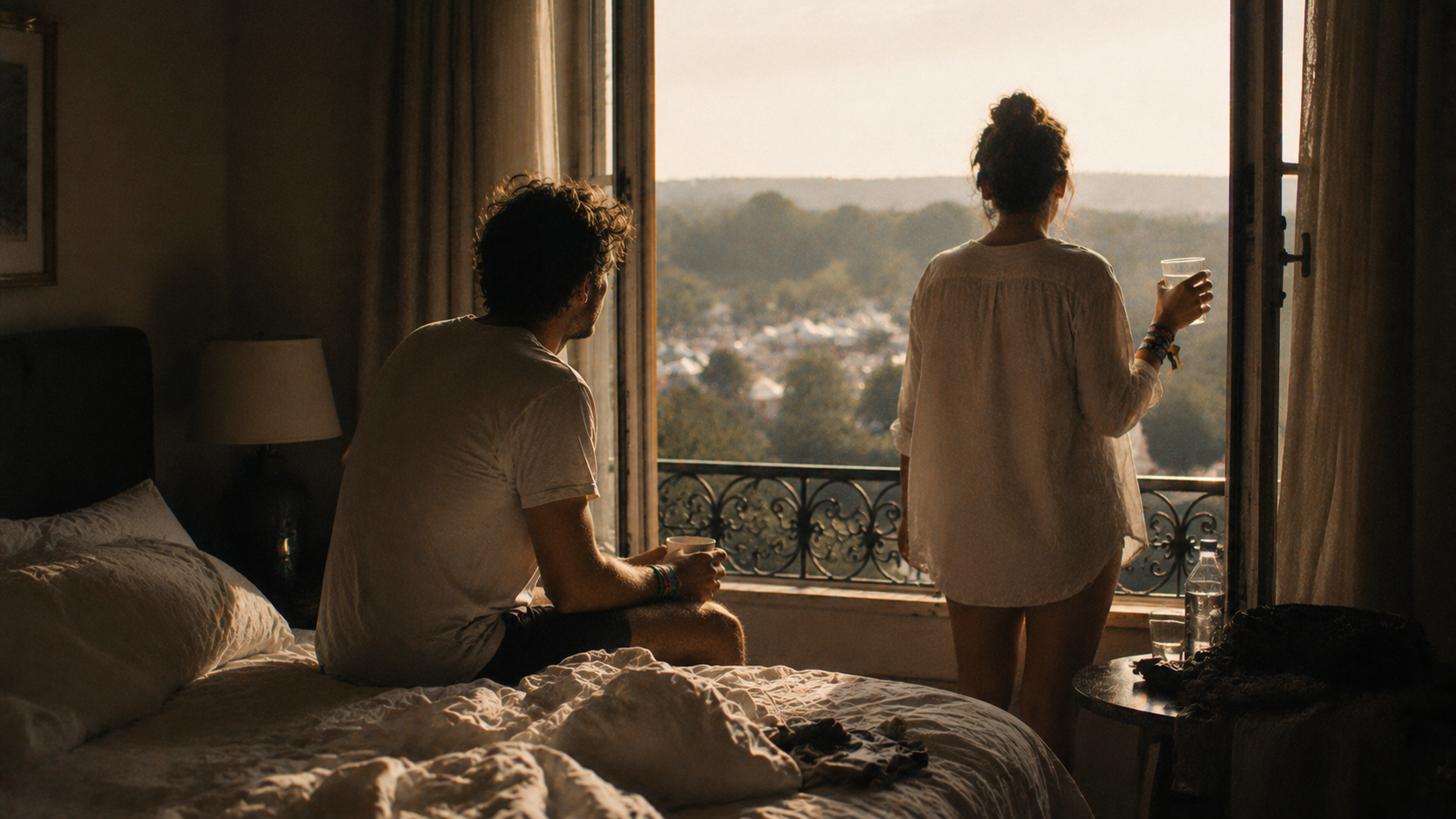
The festival is over. The music has stopped. Now comes the part nobody talks about — and the part that, if you get it right, makes the whole thing last a little longer.
There is a particular kind of tiredness that only festival people know. It is not the tiredness of overwork or poor sleep — though both of those are involved. It is the tiredness of having been fully present for several days: of sound, of people, of movement, of emotion. Your body has been asked to do a great deal. Your nervous system has been lit up like a stage rig at midnight.
Coming home well is a skill. This is how to do it.
The Soft Landing
The first thing to understand is that you do not need to re-enter normal life immediately. Resist the impulse. The emails will wait until tomorrow. The laundry can go in the corner. The voicemails are not urgent.
What you actually need, in the first two hours, is almost nothing. Come through the door. Take your shoes off. Put your phone face down somewhere you cannot see it. Change into the softest clothes you own. If you have the afternoon, let the afternoon be quiet.
This is not laziness. It is the buffer zone between the world the festival creates and the world you actually live in — and crossing it too quickly is how you end up feeling hollowed out by Tuesday rather than full all week.
Hydrate Without Overthinking It
Your body has been through something, and the first priority is straightforward: fluids. Not complicated, not expensive — just consistent.
Water is the foundation. If you have electrolytes, add them — a single sachet dissolved in a large glass does more than four glasses of plain water at this point. Coconut water works well and sits easily on a stomach that has had an unpredictable few days. A mug of good broth — miso, bone, vegetable — is quietly excellent: warm, mineral-rich, and something your body processes almost gratefully.
Avoid the temptation to overcorrect with coffee. One cup is fine. Beyond that, you are borrowing energy you have not yet recovered.
Eat Like Your Body Deserves Kindness
This is not the moment for discipline. Your body has been running on adrenaline, music, and whatever food was available in a field — it does not need a reset programme or a two-day fast. It needs nutrients, and it needs them gently delivered.
Eggs are almost always the right answer: protein, fat, easy to digest, and comforting in a way that is hard to explain but impossible to argue with. Avocado. A bowl of good yoghurt or thick-set quark with a little honey and whatever fruit is in season. Soup, if you have the ingredients. A smoothie if you do not.
What you are not doing is punishing yourself for what you ate over the weekend. The clean slate does not begin today. Today belongs to recovery, and recovery requires fuel.
Sleep, but Don't Fight Your Rhythm
Your sleep schedule is probably interesting right now. You may be exhausted but unable to drift off at a sensible hour. You may fall asleep on the sofa at 7pm and wake at 3am feeling oddly alert. Both are normal.
The advice here is to stop trying to force it into a shape. A short sleep in the afternoon — twenty minutes, maybe forty — is not a failure of will. It is your body asking for something it needs. Give it. Early to bed is fine if you are genuinely tired; staying up until midnight because you feel you should is not. The rhythm will return on its own if you stop fighting it.
What helps most, in the evenings: low light, no screens an hour before bed, a room that is cool and dark. A sleep mask if you do not already own one. These are small adjustments with outsized effect.
The Skincare and Body Reset
Festivals are not, in general, kind to skin. A few days of sun, dust, disrupted sleep, and intermittent hydration show up on your face in ways that are not dramatic but are real. This is also the moment your scalp needs attention, and your feet, and the rest of the body that has been standing and dancing in warm clothing for the better part of a week.
The shower you take when you get home is not just about cleanliness — it is ceremonial. Let it be long and hot. Follow it with a hair mask if you have one. Body lotion, applied slowly, is genuinely restorative in a way that is easy to dismiss and difficult to dispute once you have experienced it.
If you have magnesium flakes, a bath with them that evening is perhaps the single most effective thing you can do for sore muscles and disrupted sleep simultaneously. A foot soak works almost as well with less effort: a basin of warm water, some Epsom salt, fifteen minutes while you read.
For your face: a gentle oil cleanser to clear whatever has accumulated, a hydrating serum, and nothing more aggressive than that for forty-eight hours.
Move Gently
Your body wants to move, but not yet in the way your fitness habits might suggest. The gym can wait two days. A run can wait a day. What cannot wait — because it actively helps — is a slow walk.
Forty minutes outside, at a pace that does not feel like exercise, does something that rest alone cannot: it moves the blood, clears the mind, and gently re-engages the body with ordinary life. Take it without headphones if you can. The quiet is part of the medicine.
Stretching in the evening — the hips especially, which bear the cost of hours of standing — is worth fifteen minutes of anyone's time. A restorative yoga class, if one is available to you, is better still. The instruction to do less than you think you need is almost always correct at this point.
The Emotional Afterglow
There is something that nobody prepares you for, and that every experienced festival person knows: the flatness that arrives a day or two after coming home.
It does not feel like sadness, exactly. It is more like a quietness that the ordinary world cannot quite fill. You had music, movement, freedom, and the particular kind of connection that happens when a crowd of people all choose to be in the same field for the same reason. And now you are back, and the world is the same as it was before, except that you are not.
This is not a problem to be solved. It is the tax on having experienced something real. The right response is not to immediately plan the next festival to fill the gap, nor to dismiss the feeling as irrational. It is to let it be what it is — an afterglow, not a void — and to know that it will settle into a warmth you carry forward.
Write something down, if that is a thing you do. Talk to someone who was there. Look at the photographs not immediately but after a few days, when the distance makes them better than memory alone.
Prepare Your Next Festival Smarter
The best time to improve your festival game is not three weeks before the next one. It is the day you get home from the last one, while it is all still vivid.
What ran out too quickly? What did you wish you had brought? Where did you cut corners that cost you more than they saved? What one thing would have made a genuine difference?
Write it down somewhere you will find it. Update your packing list while the specifics are clear. Note the hotels that worked and the ones that did not — what made the difference, and whether it was worth the rate.
The gap between a good festival and a great one is often not the lineup. It is the quality of the infrastructure you built around it. That infrastructure starts being designed the day you come home.
